In this guide we will familiarize ourselves with the hardware, explain how to connect the display to your microcontroller of choice, cover how to install the Arduino libraries, and give an overview of the software examples that you can start off with.
In this hookup guide, we'll connect our sensor up to our Esp32 Thing Plus microcontroller and run a of quick (Qwiic) example to get you up and running with this fantastic board!
The goal of this project is to have a website hosted on an ESP32 that controls any relay-controlled device connected to a local network and keeps a dynamically updated state of those devices.
Looking to keep a log of the climate in your greenhouse, create a humidor control system or want to track temperature and humidity data for a weather station project? The SparkFun Humidity Sensor Breakout - SHTC3 (Qwiic) may be the perfect option for you!
The SparkFun Environmental Sensor - BME680 (Qwiic) is a breakout for the 4-in-1 BME680 gas sensor from Bosch. The BME680 combines a gas sensor with temperature, humidity and barometric pressure sensing for a complete environmental sensor in a single package.
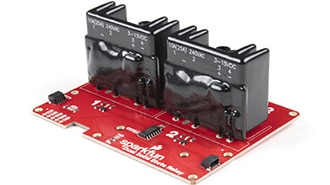
In this tutorial we'll detail the hardware on the Dual Solid State Relay, how to connect it to an Arduino or other microcontroller and how to use the examples included in our Arduino library and Python package.
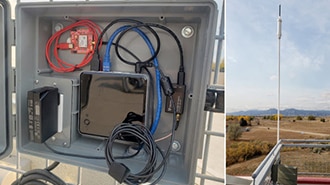
This tutorial will focus on setting up your own fixed antenna on your roof or other fixed structure and configuring a minicomputer to serve that data over the internet where it can be accessed by WiFi or more commonly, from a cellular phone or modem.
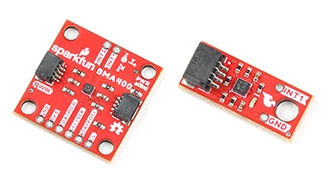
The SparkFun Triple Axis Accelerometer Breakout - BMA400 (Qwiic) (Standard and Micro) offer a 3-axis acceleration sensor perfect for ultra-low power applications on a easy to use Qwiic breakout boards.
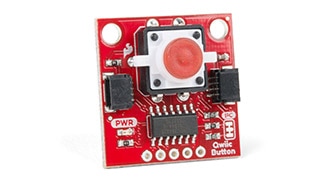
These breakouts eliminate nearly all the inconvenience of using buttons by converting everything to an easy-to-use I2C connection using the Qwiic Interface.








 設定
設定
 迅速な配送
迅速な配送
 送料は無料
送料は無料
 Incoterms
 お支払い方法


 マーケットプレイス製品