設定
設定
 迅速な配送
迅速な配送
 送料は無料
送料は無料
 Incoterms
 お支払い方法


 マーケットプレイス製品

DIY Karaoke Machine
2017-04-24 | By All About Circuits
License: See Original Project
Courtesy of All About Circuits
The origins of Karaoke, which translates roughly to “empty orchestra” in Japanese are shrouded in mystery. It was originally developed to help musicians practice without having to assemble the entire band. Now, Karaoke is often the centerpiece of both dive bars and family fun nights. The common consensus is that the karaoke machine was invented by the Japanese businessman and musician Daisuke Inoue. However, since he never filed a patent, he didn’t profit on the device’s sales. The first Karaoke machine sold commercially by the company Clarion, which is also credited often for the invention. Clarion didn’t file a patent either, so we may never know the true origins.
Daisuke Inoue with his Karaoke Machine. Courtesy of Daisuke Inoue.
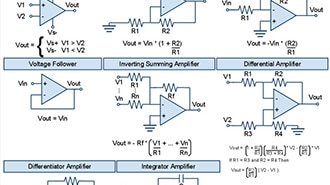
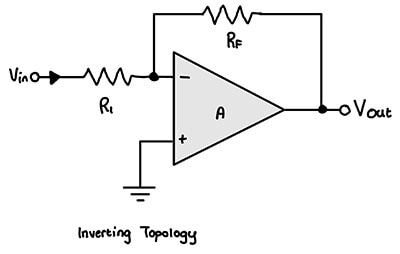
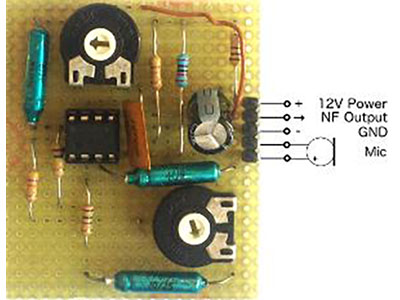
Karaoke systems can be a ton of fun, but they also tend to be pricey. Luckily, with a few potentiometers and an op-amp, you can make your own Karaoke machine! At the heart of a mixing circuit is a basic summing circuit. One cool thing about this circuit is that there’s no limit to the number of channels you can add. Just because you can add 50 channels for you and 48 of your closest friends to sing karaoke, doesn't mean that you should. If you were to freeze an AC signal in time, it would look like a DC value. If we summed all 50 DC values together, you’ll probably saturate your amplifier.Let's say that you want to have 4 singers and 1 song mixed together for a party. This is a total of 5 channels, so you’ll need 1 op-amp and 5 potentiometers. An op-amp is not well suited for directly driving a speaker, so a power amp is usually added to drive the speaker. It’s also common to add a pre-amp to normalize all signal inputs.
A little info about microphone pre-amps and power amps. Many microphones may require "phantom power" depending on the type, and some microphones can be damaged by phantom power. Other microphones may use battery power. This design doesn’t include a microphone pre-amp that provides phantom power. If you add microphones, look into the type of power your microphone requires. Common specs for phantom power are 12, 24, or 48 volts. Many digital microphones often use 10 volts for phantom power.
Most stereos and computer speakers include built-in power amps. If you choose to build your own power amp, be sure to pay careful attention to the speaker’s power requirements and the power that your amp is capable of delivering. For large power amps, take precautions to ensure sufficient cooling is provided. The schematic below does not have a power amp because prebuilt speakers were used.
Schematic and BOM