設定
設定
 迅速な配送
迅速な配送
 送料は無料
送料は無料
 Incoterms
 お支払い方法


 マーケットプレイス製品

Cell Balancing and Why It Matters
2025-12-31 | By Maker.io Staff
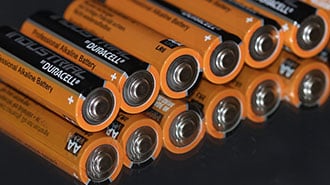
Battery pack management is an often-overlooked topic in DIY projects. Yet it’s vital to keep the individual cells in a pack balanced and well-maintained to ensure their reliability and longevity. Keep reading to learn everything you must know about cell balancing, why it matters, and how to manage batteries correctly in projects.
Why Do Battery Cells Go Out of Balance?
Each cell in a battery pack has a slightly different internal resistance compared to the others. Many factors influence a cell’s internal resistance, including its age, manufacturing tolerances, the number of charge and discharge cycles, the chemical composition, and temperature.
The internal resistance affects a cell’s charge and discharge characteristics. Greater resistance leads to increased self-discharge, reduced charging speed, and higher losses when discharging the cell, resulting in impaired performance and higher temperatures.
This difference is typically minuscule, and it does not cause a noticeable disparity after one charge or discharge. However, after many cycles, cells can drift out of balance when they go unmonitored. Homemade battery packs, in particular, may start unbalanced, even when using batteries from the same batch, and balancing the cells is recommended.
Which Battery Types Require Cell Balancing?
Cell imbalance affects all multi-cell battery packs, regardless of type and chemical composition. It begins with primary batteries, such as AA alkaline used in toys, and extends to more complex multi-cell LiFePo4 packs, found in high-power applications. However, not all battery types are equally sensitive to cell imbalances.
Primary battery packs don't typically use any balancing mechanisms. Because they cannot be recharged, the weakest cell sets the limit for the whole pack. After that cell is drained, any remaining energy in the other cells goes unused. This is also why you should not mix old and new cells. The currents in these packs are usually low, so imbalance isn’t a safety concern.
Rechargeable (secondary) battery packs are more susceptible to imbalance than primary cells are. The cell with the lowest capacity still sets the lower limit of the pack, and once it’s empty, the whole pack must be recharged. On the other side, the highest-capacity cell determines the upper limit, and charging must stop when the first cell reaches its maximum safe voltage. Over time, this mismatch leaves some cells partially charged while others risk being over- or under-charged. The result is a reduced pack capacity, potentially reduced battery lifespan, and, in worst cases, safety hazards. Lithium-based cells are particularly sensitive to both overcharging and deep discharging. Other formulations, such as NiMH and lead-acid batteries, are usually more forgiving and better at self-balancing.
 This figure outlines the drastic capacity drop of a lithium cell charged beyond its maximum voltage of 4.20V. Even a seemingly minuscule overcharge of 0.05V results in the cell’s capacity halving after 400 cycles. Image courtesy of Battery University
Cell Balancing in DIY Projects
The good news is that most quality battery packs, such as the ones sold by DigiKey, already include a built-in battery management system (BMS). The BMS keeps the cells balanced, ensuring that they stay within safe operating limits, which maintains performance and extends the lifespan.
 A screenshot of a typical battery pack datasheet. The product information usually includes details on the presence of a BMS, the BMS type, and supported communication methods.
When building a pack from scratch, use high-quality batteries and an off-the-shelf BMS that’s suitable for the cells. Most cell-balancing circuits use one of two techniques to keep the cells synchronized. Passive balancing dissipates excess energy as heat, and it’s simple to implement and inexpensive. However, it’s wasteful, slower, and unsuitable for high-current and high-capacity packs. Active cell balancing is more complex because it moves charge between cells to equalize their voltages. It’s more efficient, but it’s also more complex and expensive. Nonetheless, some packs, especially lithium-based ones, require additional management to maintain the cells.
Finally, designing a custom management system usually isn’t worth the time, cost, or risk. It’s too easy to reduce the lifespan or performance of cells or, in the worst case, trigger dangerous failures like thermal runaway.
Summary
Keeping the individual cells in a battery pack balanced is essential to maintain performance, lifespan, and safety. Even small differences in internal resistance or capacity can accumulate over time, causing cells to drift out of balance. Primary packs, like alkaline, don’t recharge, and energy in stronger cells is wasted. Rechargeable packs are more sensitive, and the weakest and strongest cells set the limits for discharge and charge. Lithium-based chemistries are particularly prone to damage from over- or undercharging, whereas NiMH and lead-acid are more forgiving.
Most quality packs already include a BMS to handle balancing automatically. When building one from scratch, it’s vital to use reliable cells and an off-the-shelf BMS rather than designing a custom one. Passive balancing is simple and cheap but wasteful, while active balancing is more efficient but more complex and costly. Overall, proper cell management ensures that battery packs last longer, perform better, and stay safe.