






 設定
設定
 迅速な配送
迅速な配送
 送料は無料
送料は無料
 Incoterms
 お支払い方法


 マーケットプレイス製品
Intro to Embedded Rust - Part 1: What is Rust? | DigiKey
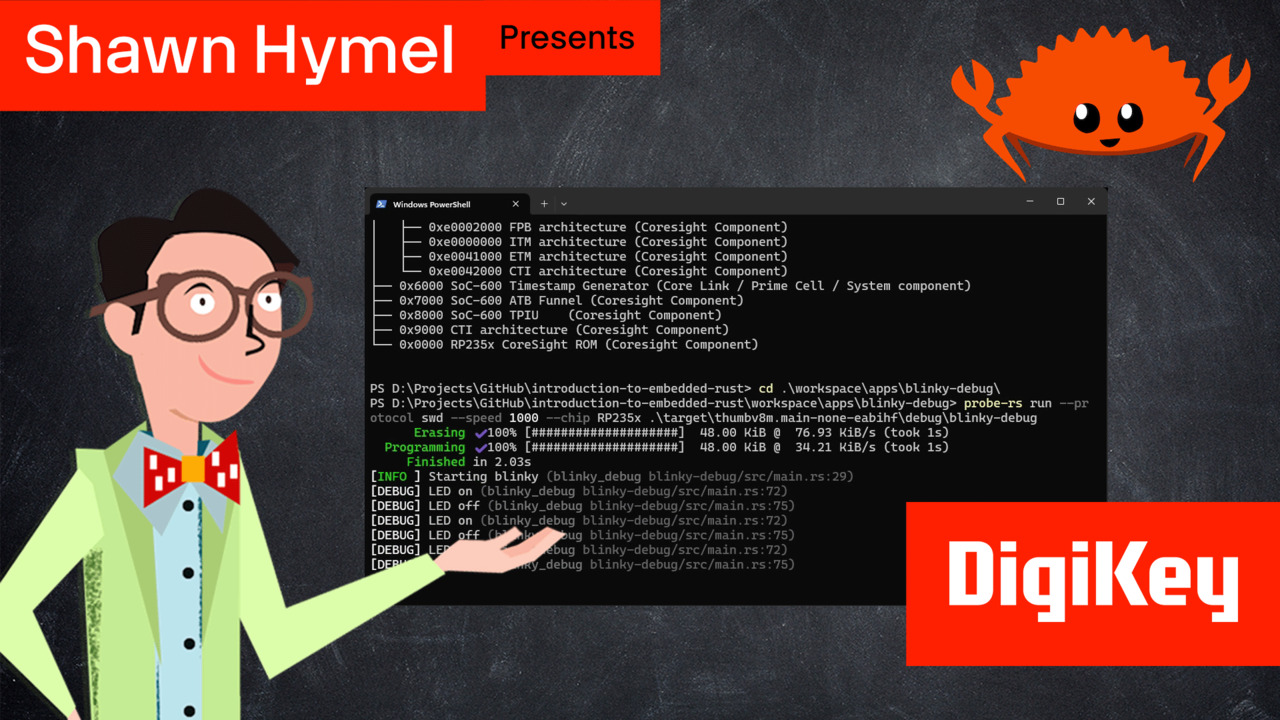
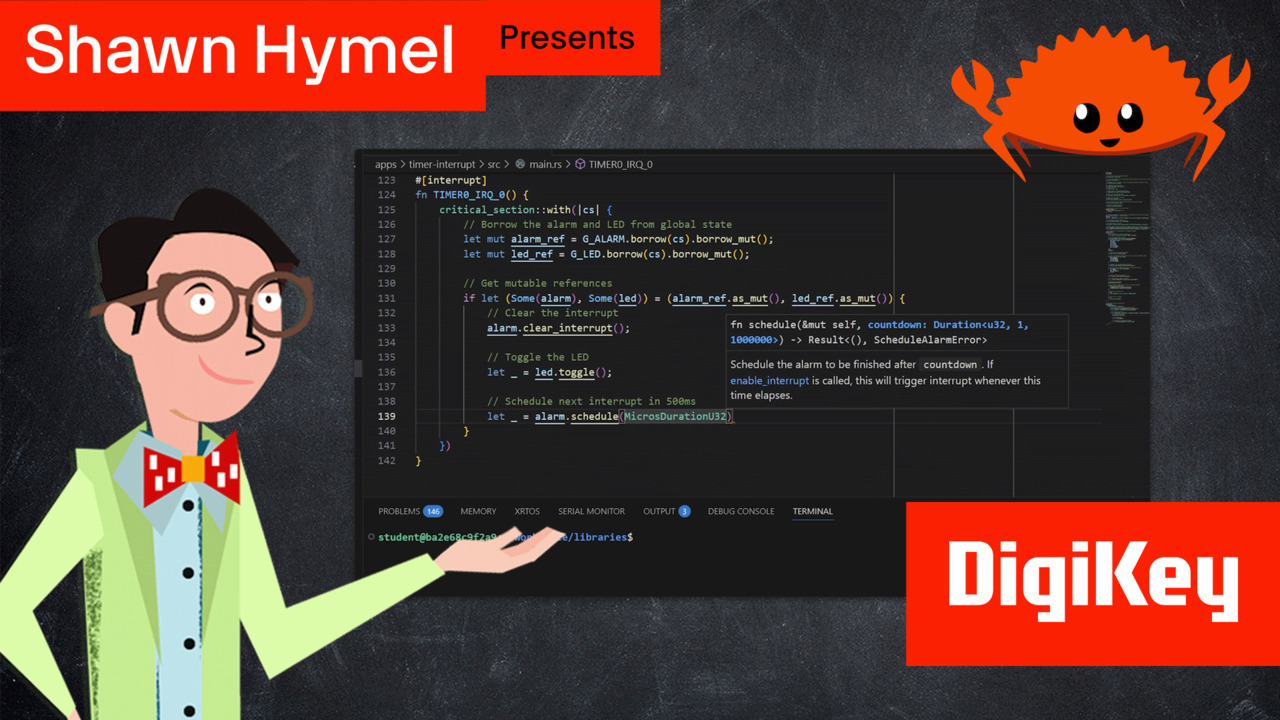
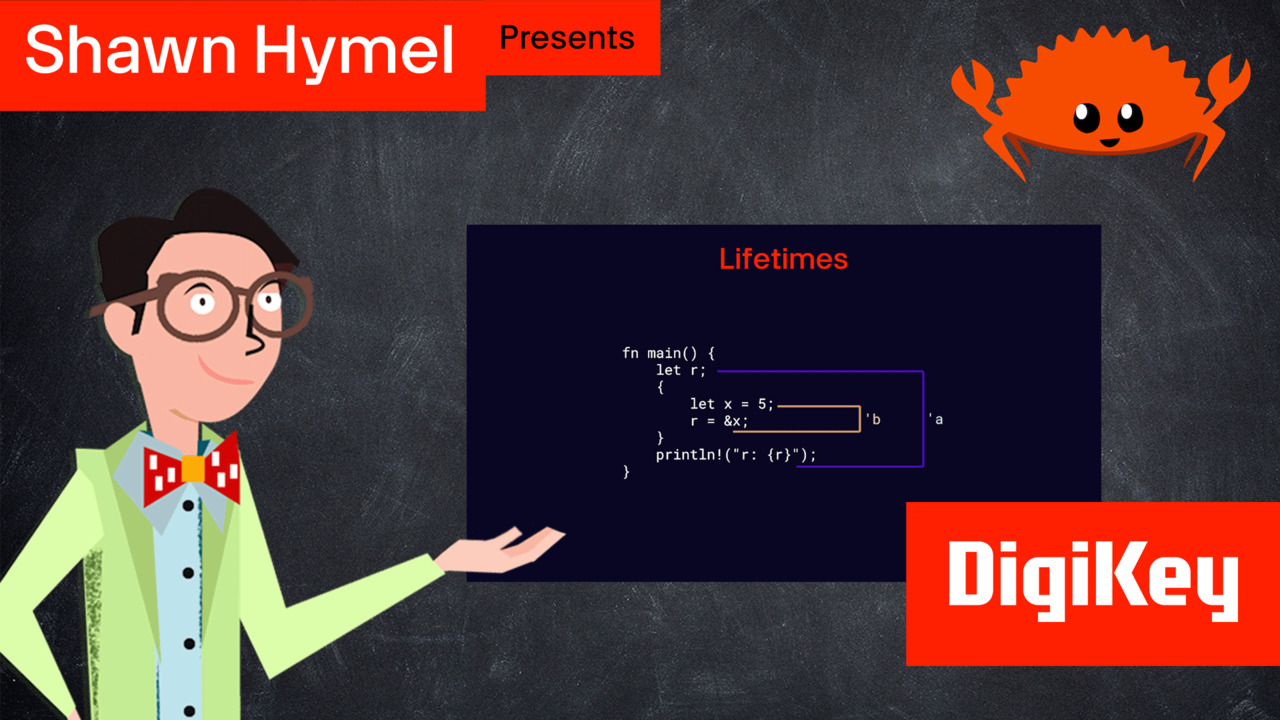
Rust is a modern systems programming language designed for both safety and speed. In this first episode, we explore what makes Rust unique, why it’s gaining traction across industries, and why it’s a promising option for embedded systems. From its origins as a side project in 2006 to its growth into a foundation-backed language used by companies like Microsoft, AWS, and Raspberry Pi, Rust’s history helps explain why so many developers are paying attention today. The written guide for this episode can be found here: https://www.digikey.com/en/maker/projects/intro-to-embedded-rust-part-1-what-is-rust/3ca21d868187415b94b0ff07a271dde6 The GitHub repository containing the Docker image and example code for this series can be found here: https://github.com/ShawnHymel/introduction-to-embedded-rust Unlike older languages that rely on either manual memory management (C, C++) or garbage collection (Java, Python), Rust introduces a third approach: the ownership model. This model enforces memory safety at compile time, helping to eliminate entire classes of bugs while still giving developers low-level control. Combined with features like zero-cost abstractions, predictable performance, direct hardware access, and even inline assembly support, Rust strikes a powerful balance between expressiveness and efficiency. Of course, Rust isn’t without its challenges and limitations. The learning curve can be steep, compile times are longer than C, and the embedded ecosystem is still maturing with limited vendor support. Real-time operating systems in Rust are still emerging, and some libraries are community-driven rather than industry-backed. That said, with growing adoption, expanding hardware support, and strong community contributions, Rust is becoming an increasingly popular choice for embedded projects. In this episode, we’ll set up a pre-configured Docker environment and walk through building a simple “Hello, world!” application in Rust. This provides the foundation for the rest of the series, where we’ll explore embedded programming on the Raspberry Pi Pico 2, cover Rust fundamentals like ownership and traits, and eventually move into advanced topics like interrupts, debugging, and asynchronous frameworks.


Part List
| 画像 | メーカー品番 | 商品概要 | 入手可能な数量 | 料金 | 詳細を表示 | |
|---|---|---|---|---|---|---|
 |  | SC1631 | RASPBERRY PI PICO 2 RP2350 | 25965 - 即時 | $829.00 | 詳細を表示 |
|  | SC1633 | RASPBERRY PI PICO 2 W RP2350 | 5961 - 即時 | $1,161.00 | 詳細を表示 |
|  | SC1632 | RASPBERRY PI PICO 2 H RP2350 | 2614 - 即時 | $995.00 | 詳細を表示 |
|  | CF14JT220R | RES 220 OHM 5% 1/4W AXIAL | 109124 - 即時 30000 - 工場在庫品 | $17.00 | 詳細を表示 |
|  | LTL-4224 | LED RED CLEAR T-1 3/4 T/H | 72310 - 即時 | $23.00 | 詳細を表示 |
|  | DH-20M50055 | USB AM TO USB MICRO, USB 2.0 - 1 | 10945 - 即時 | $257.00 | 詳細を表示 |
|  | 1957 | JUMPER WIRE M TO M 6" 28AWG | 3608 - 即時 | $323.00 | 詳細を表示 |
|  | FIT0096 | BREADBRD TERM STRIP 3.20X2.00" | 3452 - 即時 | $481.00 | 詳細を表示 |
|  | 1825910-6 | SWITCH TACTILE SPST-NO 0.05A 24V | 42542 - 即時 | $22.00 | 詳細を表示 |
|  | 13314 | TMP102 DIGITAL TEMP SENSOR BOARD | 248 - 即時 | $987.00 | 詳細を表示 |
|  | SC1634 | RASPBERRY PI PICO 2 WH RP2350 | 2195 - 即時 | $1,327.00 | 詳細を表示 |






 日本
日本