






 Settings
 Fast Delivery
 Free Shipping
 Incoterms
 Payment Types


 Marketplace Product

E88 Drone Teardown: Inside a Beginner Quadcopter
2026-02-04 | By Rinme Tom
License: General Public License
Comprehensive E88 Drone Teardown & Hardware Breakdown
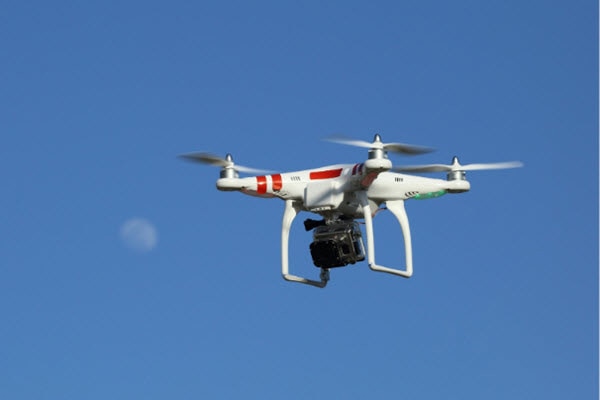
The E88 quadcopter is a compact, entry-level consumer drone designed for recreational flying and basic electronics exploration. With its foldable design, simple Wi-Fi camera, and altitude hold capability, it illustrates how even inexpensive drones integrate multiple subsystems to achieve stable flight — making it an excellent case study for makers, students, and embedded systems enthusiasts.
Package Contents & First Look
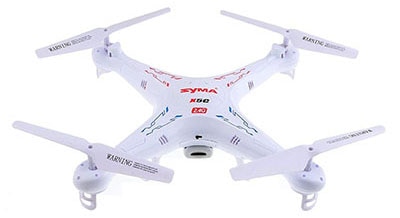
Out of the box, the E88 arrives largely assembled, with all four propellers already in place. Included with the drone are:
A 2.4 GHz Mode 2 dual-joystick remote controller
Rechargeable 3.7 V Li-ion drone battery
USB charging cable
A carry case
Spare propeller sets clearly marked for correct installation
A basic user manual and optional propeller guards for safer indoor flying
This ready-to-fly setup makes it convenient for beginners, while the teardown reveals the underlying hardware that makes flight possible.
Controller Layout & Functions
The controller uses the industry-standard Mode 2 stick configuration:
Left stick: Controls throttle (ascend/descend) and yaw (rotation).
Right stick: Handles pitch and roll for forward, backward, and lateral movement.
Additional buttons provide advanced functionality:
One-key takeoff/landing for automated sequences
Headless mode for orientation-independent control
Speed levels (low/medium/high) to suit pilot skill
Photo/video capture buttons
Emergency stop for immediate motor shutdown
Visual feedback is provided by multifunction LEDs that communicate status, such as power level and binding state, through specific blink patterns.
Battery & Power System
The E88’s power architecture consists of:
Drone: A 3.7 V rechargeable Li-ion battery (typically around 1200–1800 mAh) that supports about 8–10 minutes of flight, depending on use.
Charging: A USB-connected STC4054 linear charger handles safe charging with constant current/constant voltage control and visible LED indication.
Voltage regulation: Low-dropout regulators ensure stable voltages for the flight controller (around 2.8 V) and camera electronics (3.3 V).
Reverse polarity protection: A P-channel MOSFET prevents damage from incorrect battery installation.
This layered power management ensures that onboard electronics receive clean power while guarding against user errors.
Propeller Setup & Flight Basics
The quadcopter uses two clockwise (CW) and two counterclockwise (CCW) propellers that must be installed in their designated positions for stable flight. Correct attachment and orientation are crucial; incorrect setup can cause unstable behavior or crashes.
Flight Modes
Manual mode: Direct pilot control with no automatic stabilization. Best for experienced users.
Altitude hold: Uses a barometric sensor to maintain height, simplifying hover.
Headless mode: Makes control relative to the pilot's perspective rather than the drone's orientation — ideal for beginners.
Speed levels: Adjust responsiveness from stable (low) to aggressive (high).
Calibration & Pre-Flight Setup
For consistent flight behavior, calibration is essential — especially after crashes or sensor drift. The process requires placing the drone on a level, vibration-free surface and holding both joysticks outward until LEDs indicate completion.
Core Hardware & Electronics
Drone Subsystem
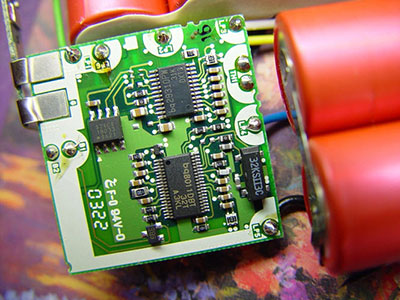
The E88’s flight electronics are composed of:
Component - Function
STM32F030F4P6 MCU - Primary flight control processing
XN297LBW RF Transceiver - 2.4 GHz communication link
L3GD20H Gyroscope - Orientation and rotation sensing
BMP180 Barometric Sensor - Altitude hold input
Si2300DS MOSFETs - Motor drive switching
Wi-Fi camera module - Live video feed (720p max)
Various LDO regulators - Stable power rails for electronics
These elements work together to read sensor data, calculate control commands, and adjust motor outputs in real time.
Controller Electronics
The handheld controller also houses a microcontroller for reading joystick positions, managing button functions, and transmitting commands back to the drone. The RF transceiver and a simple buzzer provide status feedback.
Flight Control & Communication
The drone’s microcontroller continuously processes inputs from the gyroscope and barometer to balance movement and maintain altitude where applicable. Commands from the controller are transmitted over a robust 2.4 GHz link using automatic acknowledgement and retransmission protocols, enabling responsive control up to typical line-of-sight ranges.
Camera & FPV System
A built-in Wi-Fi camera module streams video to a mobile app via its own access point. While resolution can reach 720p, real-time transmission is constrained by bitrate limitations common in affordable FPV systems — potentially causing lag or dropped frames.
Conclusion: A Practical Learning Platform
While the E88 is fundamentally a budget-oriented toy drone with basic materials and limited programmable support, the teardown reveals surprisingly mature electronics and control logic under the hood. For electronics hobbyists and makers, analyzing its structure helps demystify how consumer drones integrate microcontrollers, sensors, wireless links, and power systems to achieve controlled flight — making it an educational demonstration of real-world embedded design












 Japan
Japan