


 Settings
 Fast Delivery
 Free Shipping
 Incoterms
 Payment Types


 Marketplace Product
Special Technical Content | Master "Analog-to-Digital Conversion" to Unlock True Performance
DigiKey has released the second installment of a special technical content series produced in collaboration with Analog Devices Japan. This series provides a systematic approach to learning the design techniques behind high-performance analog-to-digital conversion systems.
In modern embedded systems, A/D converters are critical components that accurately convert analog signals—such as temperature, pressure, current, vibration, and audio—into digital signals. No matter how powerful the microcontroller, FPGA, or AI algorithm is, the system cannot perform at its best if the conversion itself is not accurate.
This content helps you build the design skills needed to fully unlock the true performance of A/D converters through a three-step learning approach: understanding the theory, translating it into design capability, and gaining practical know-how.
Special Technical Content – Part 1: "Learn Analog Circuits in Three Steps—Read, Watch, and Try"
Part 1 covers analog circuit design from the fundamentals through practical implementation and measurement. To fully maximize the performance of an A/D converter, the quality of the front-end OP amp and power circuits is critical—including factors such as phase margin, loop gain, stability, phase compensation, and load response.
As a foundation for understanding Part 2 more deeply, we recommend starting with Part 1.

Step 1: Technical Article Series – "Using 24-Bit Sigma-Delta A/D Converters for Measurement" (3 parts)
Step 1 begins with understanding the fundamentals of A/D converters.
Satoshi Ishii, Principal Engineer at Analog Devices, explains the core concepts behind sigma-delta (ΣΔ) A/D converters—including the principles of noise shaping, how quantization noise is handled, the relationship between SNR and resolution, and comparisons with SAR A/D converters. Rather than simply explaining how to use them, the series focuses on why they work the way they do.
Part 1
The Key to High Resolution and High SNR: Noise Shaping
This article explains how quantization noise is pushed to higher frequencies and then removed by a digital filter in the later stage, using both mathematical explanations and spectral analysis. It also provides an intuitive understanding of how a 1-bit modulator combined with decimation processing can achieve an effective resolution equivalent to 16–24 bits.
Read the Technical Article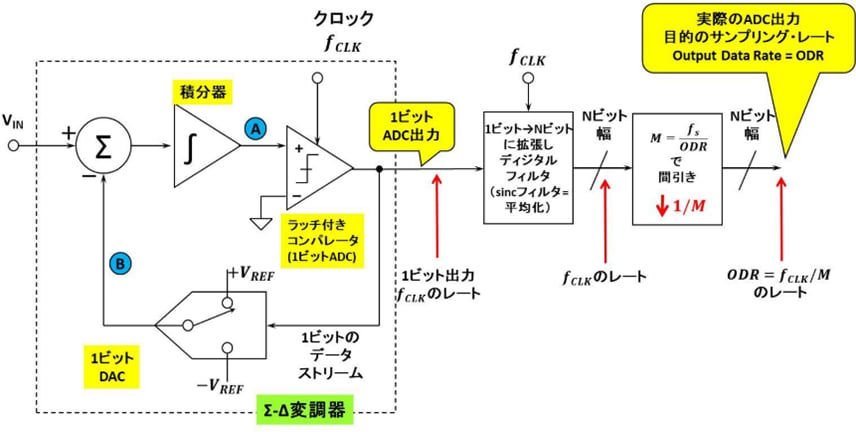
Part 2
Experimental Study: Noise Shaping Circuits in Commercial ICs
Using Analog Devices technology as an example, this article visualizes the effects of noise shaping through the output and spectral analysis of a ΣΔ modulator. By examining real measurement data, you can clearly observe how quantization noise shifts to higher frequencies, helping you better understand the theory in practice.
Read the Technical Article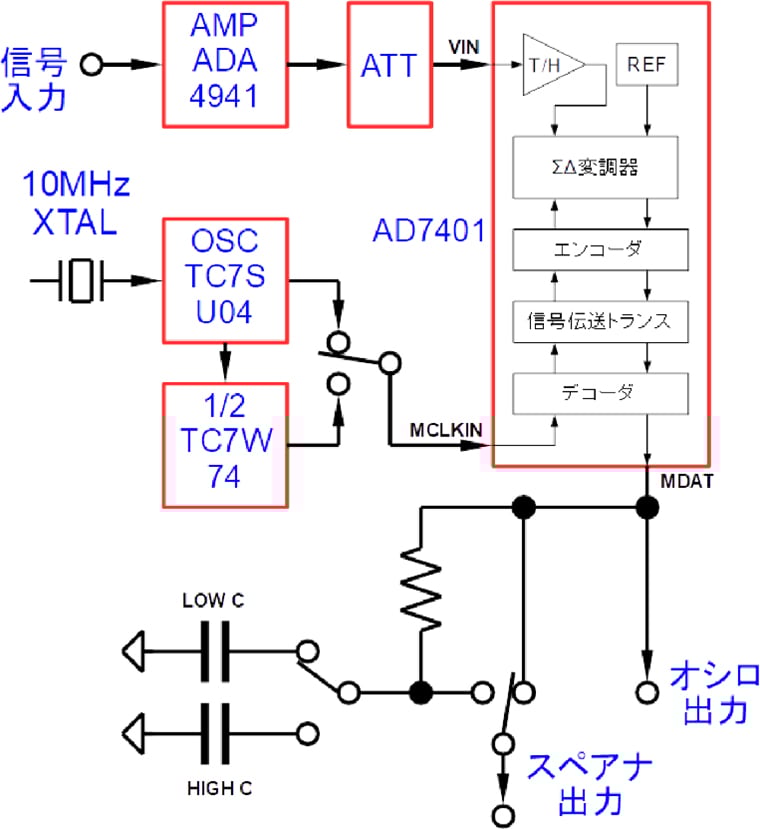
Part 3
Designing a Low-Noise A/D Conversion System
This article also covers system-level noise design, including SAR A/D converters and analog front-end (AFE) circuits. It presents practical design guidelines for optimizing system-level resolution, addressing factors such as op-amp input-referred noise, thermal noise from signal source resistance, bandwidth design, and noise management within the Nyquist band.
Read the Technical Article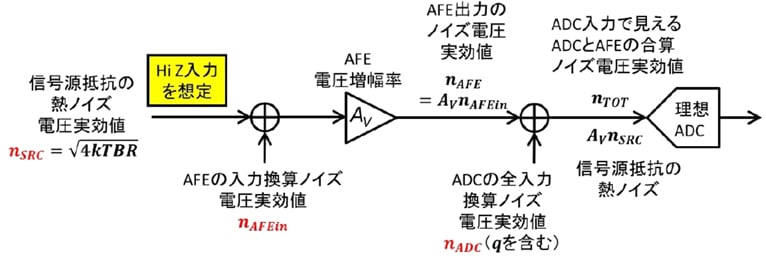
ICs Featured in the Article / Recommended ICs for Use in Combination
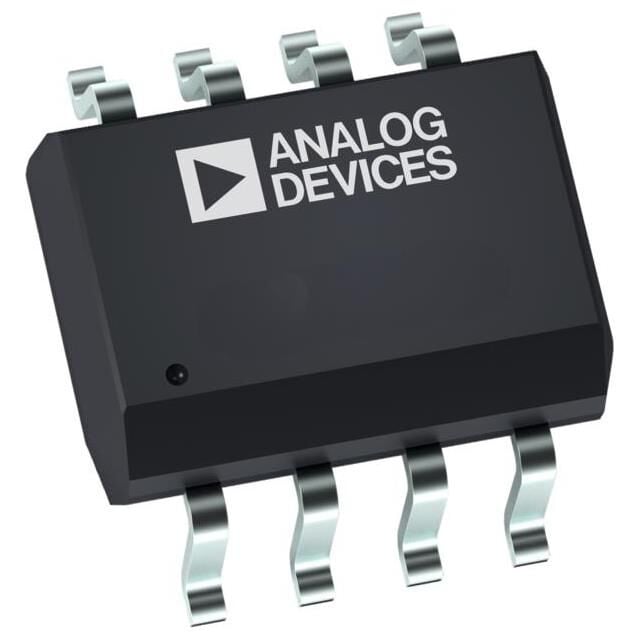
ADA4941-1
Single-supply, rail-to-rail differential driver for 18-bit ADCs with gain adjustable using a single external resistor
Learn more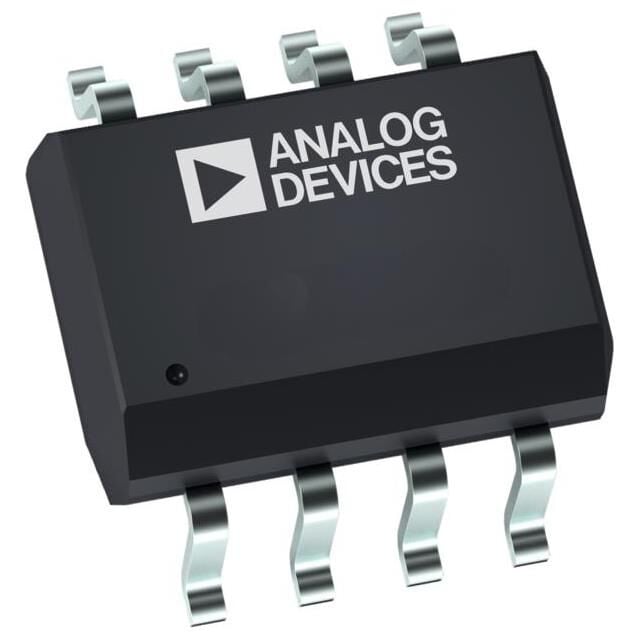
ADR4550
5V voltage reference with low drift, low noise, high accuracy, and long-term stability over a wide temperature range
Learn more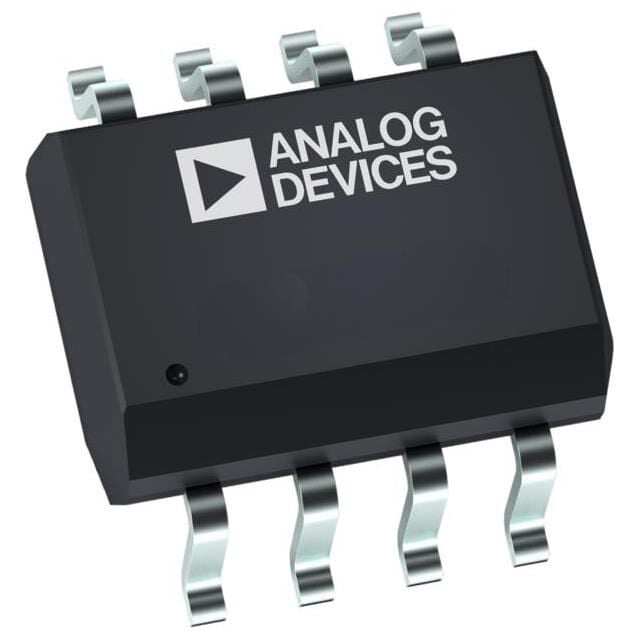
AD8429
Instrumentation amplifier for medical and precision measurement applications, featuring wide gain bandwidth, high common-mode rejection, and 1 nV/√Hz low noise performance
Learn more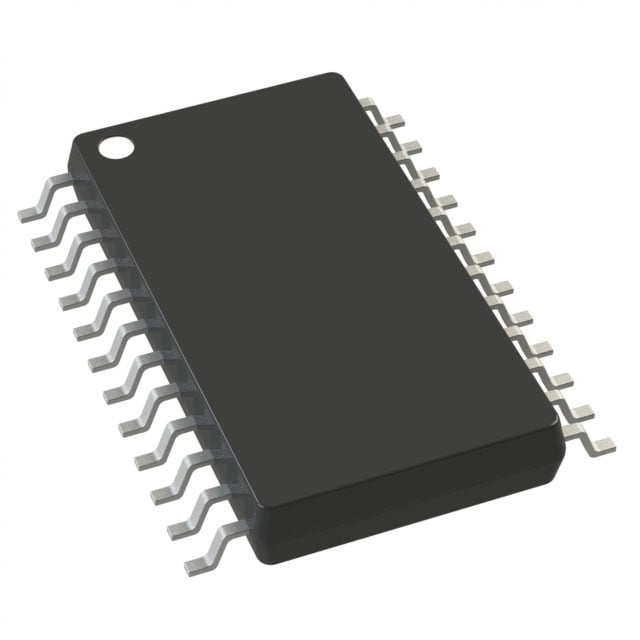
AD7124-4
4-channel, 24-bit ΣΔ A/D converter for high-precision measurements such as temperature, pressure, and flow, offering low noise and low power consumption
Learn more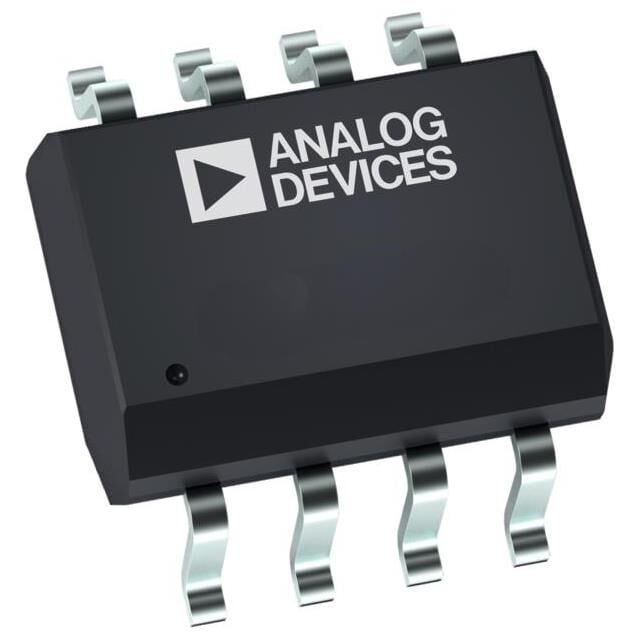
AD8210
Current-shunt amplifier for bidirectional current measurement with an input common-mode range of –2 V to +65 V, suitable for automotive, communication, and motor control applications
Learn more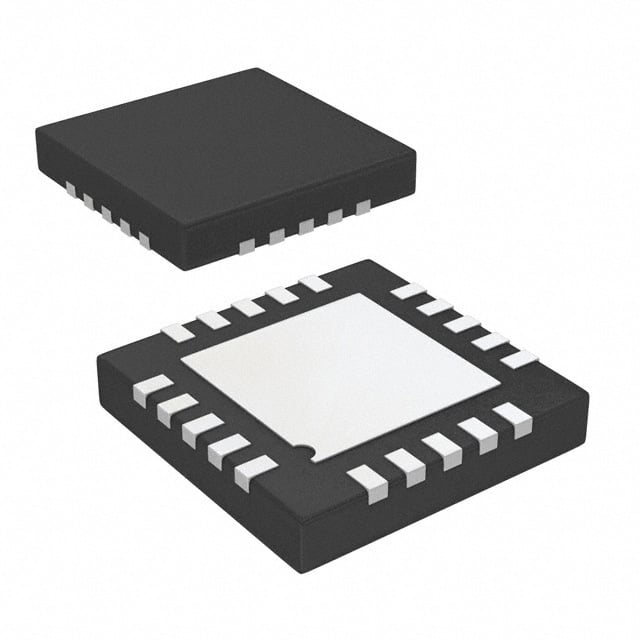
AD7944
14-bit, 2.5 MSPS high-speed A/D converter with high linearity and low-noise performance, designed for communication and medical equipment
Learn more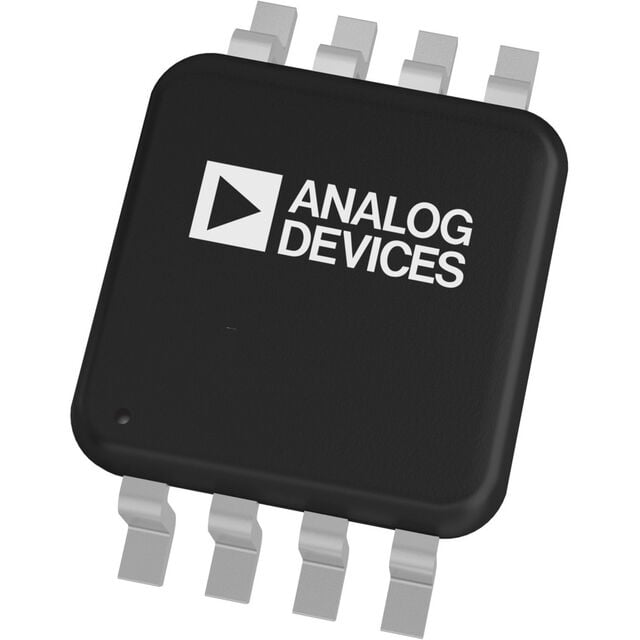
ADA4841-2
Dual op-amp for driving high-resolution ADCs, featuring rail-to-rail output, low noise (1.1 nV/√Hz), and low distortion
Learn more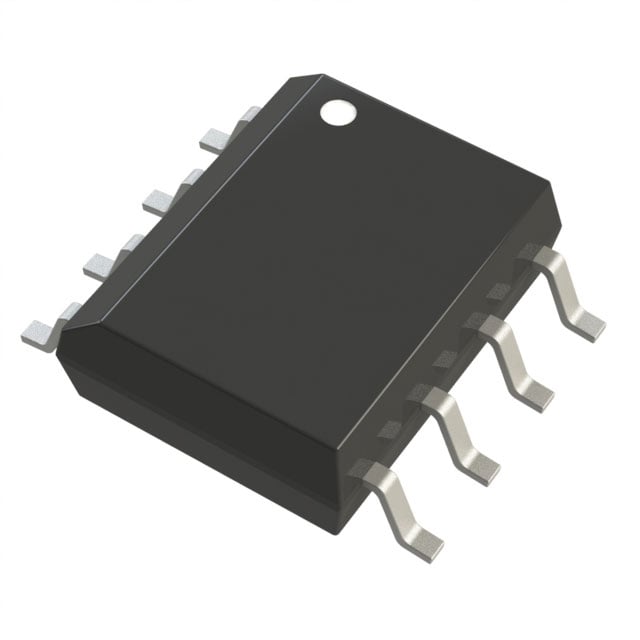
LT1128
Op-amp for audio and physical measurement applications, with low noise (0.85 nV/√Hz @ 1 kHz) and wide bandwidth (10 MHz)
Learn moreStep 2: Hands-on Seminar – "Ready-to-Use 24-bit Analog-to-Digital Conversion Kit for Measurement"
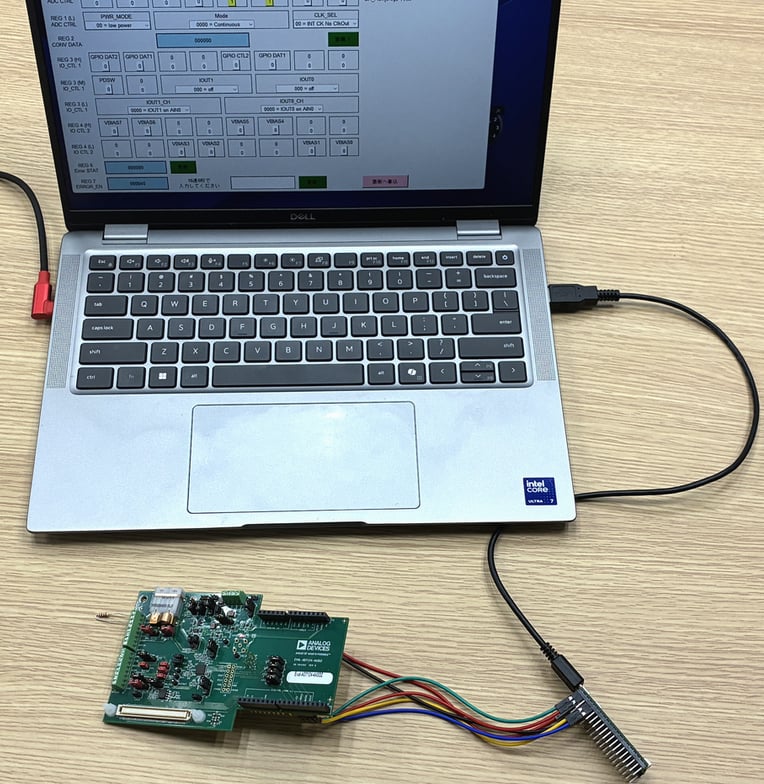
In this hands-on seminar, Satoshi Ishii, Principal Engineer at Analog Devices, will guide participants through practical experiments using an evaluation board. By performing spectrum analysis and comparing SNR results, participants will deepen their understanding of A/D conversion.
Using a 24-bit sigma-delta A/D converter kit together with a USB microcontroller (Raspberry Pi Pico), participants will build a sigma-delta A/D conversion system and observe how changes in conditions affect the results. By comparing these results and exploring the cause-and-effect relationships, participants can learn the theory through practical, hands-on experience.
Participants who register for the Full Kit Practical Course A will receive exclusive materials prepared by the instructor specifically for this seminar, including lecture notes, source code, and circuit simulation files.
Step 3: DigiKey Japan Official YouTube Channel Video Series
"Experiment Before & After! Mastering Electronic Circuit Design – Reviving Failed Circuits with LTspice Simulation" (5 episodes)
Following the technical article series and the hands-on seminar, Satoshi Ishii, Principal Engineer at Analog Devices, provides practical explanations on the OP-amp front-end circuits and power supply design that support A-D converter performance. The videos cover key topics such as stability, phase margin, and compensation design.
In addition, the LTspice circuit data used in the videos is available for free. By downloading the files, you can run the simulations yourself and learn through hands-on experience.
On the DigiKey Japan Official YouTube Channel, we also publish a wide range of content covering electronics—from fundamentals to advanced topics—for engineers at all levels, from students and early-career engineers to experienced professionals.
Please subscribe to the channel and enable notifications to stay updated.

Episode 1: Evaluating the Stability of Power Supply and Op-Amp Circuits with LTspice (Basics)
Release Date: Coming Soon
Episode 2: Evaluating the Stability of Power Supply and Op-Amp Circuits with LTspice (What Is Phase Margin)
Release Date: Coming Soon
Episode 3: LTspice FRA Function and Stability Evaluation of Power Supply Circuits
Release Date: Coming Soon
Episode 4: Stability Evaluation of Op-Amp Circuits with LTspice
Release Date: Coming Soon
Episode 5: Phase Compensation for Improving the Stability of Return Circuits
Release Date: Coming Soon




